What do we study?


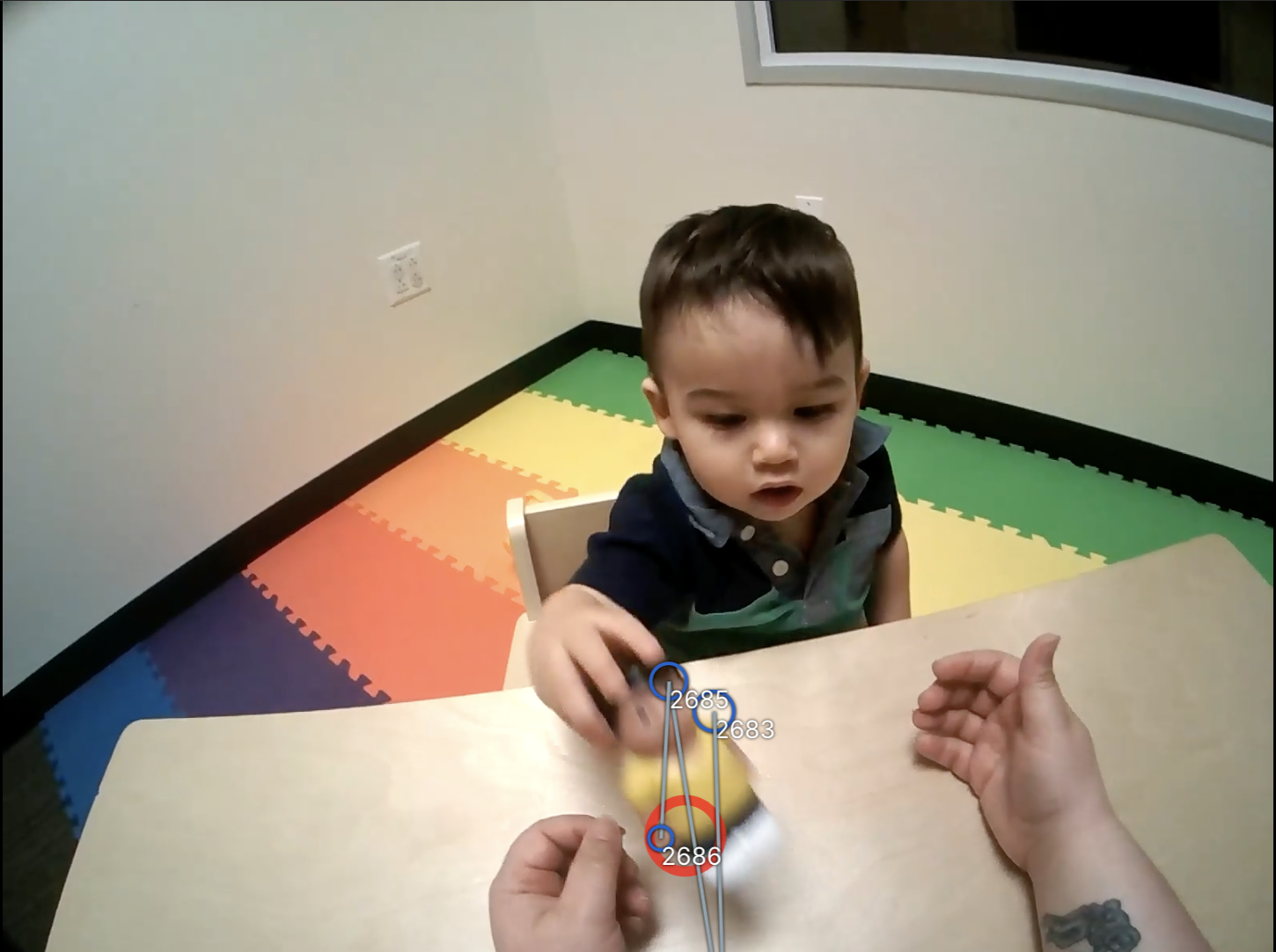
We study the systems supporting language development in infants. We study how infants’ visual, autonomic, and motor systems interact together in naturalistic, everyday environments. We measure these processes in response to their caregiver’s actions. We use head-mounted eye-tracking, wireless cardiorespiratory sensors, and computer vision to capture these signals at high resolution. We primarily focus on infants 9 to 24 months of age.
Why do we study this?


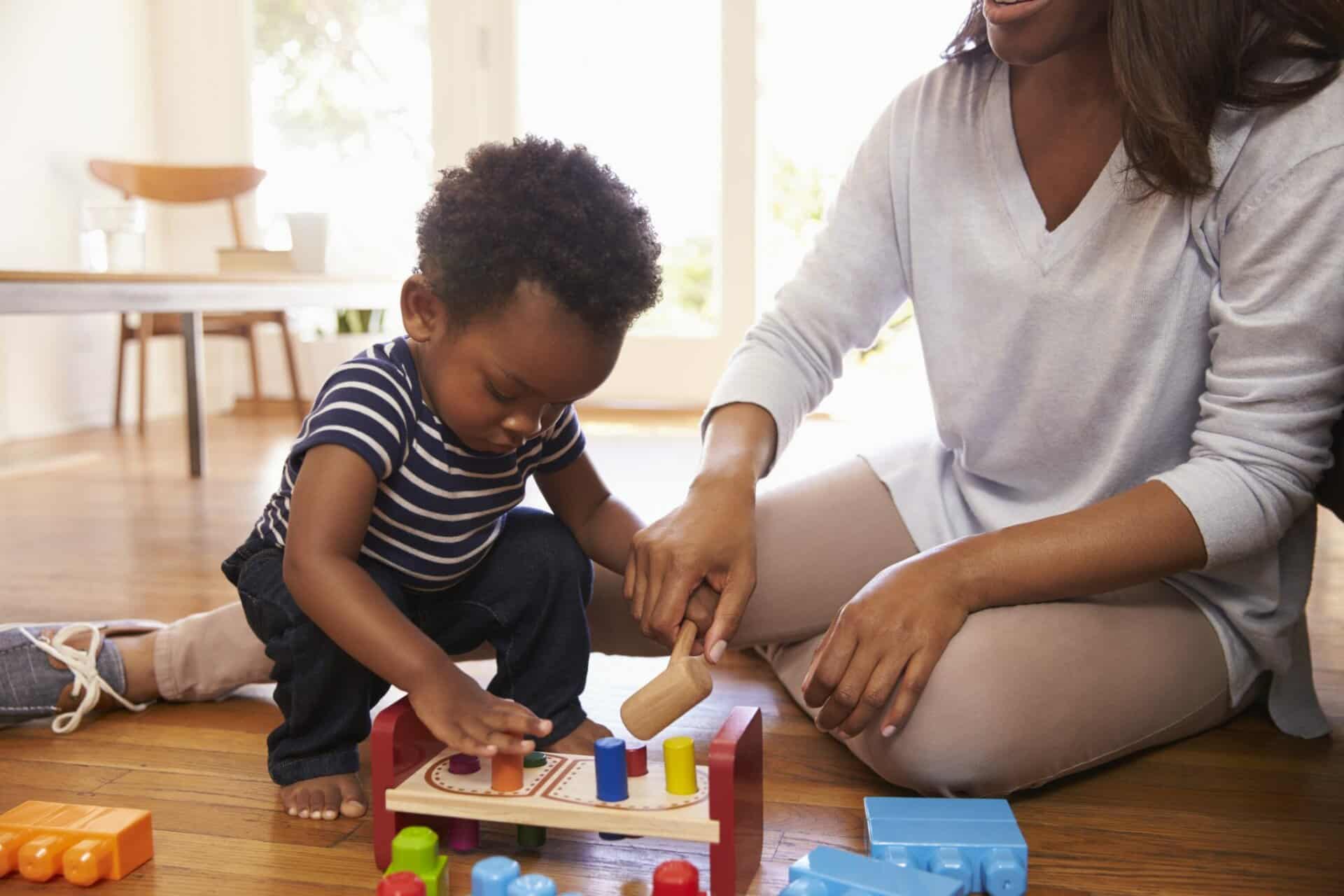
Interactions with caregivers and mature social partners are extremely important for infants’ early development. Nonetheless, we have limited knowledge about how specific aspects of caregivers' behavior, like their voice, their eye-gaze, or their touch, can influence children's physical responses, and in turn, influence their developing language and attention skills. We seek to uncover the behavioral pathways through which caregivers can support the development of their infant and find early markers for intervention in attention and language disorders.